
Peptide therapies have moved far beyond limited research or boutique clinical use. Today, they are increasingly part of wellness programs, longevity protocols, specialty pharmacy offerings, GLP-1–adjacent treatment plans, and direct-to-patient fulfillment models. As demand expands, the packaging used to move these therapies has become a more important part of operational performance.
For many peptide programs, the challenge is not simply finding a way to “ship cold.” The greater challenge is maintaining a specific temperature range across real parcel conditions, variable transit durations, seasonal exposure, and multiple handoffs. A small vial may leave a pharmacy properly packed, move through a carrier hub, sit in a delivery vehicle, and arrive at a clinic or residential address hours later. Each step can influence product condition.
Peptide shipments often involve compact payloads, limited thermal mass, and tight handling expectations. That makes packaging strategy especially important. Too little refrigerant can allow warming before delivery. Improperly conditioned refrigerant can introduce overcooling risk. A pack-out that works for one lane may not be appropriate for another. As fulfillment grows, these variables become harder to manage without a standardized approach.
Nordic Cold Chain Solutions helps peptide-focused organizations build repeatable packaging systems that align with product requirements, shipping duration, fulfillment volume, and the realities of last-mile delivery.
Why Peptide Cold Chain Programs Need More Structure

Many peptide therapies are commonly managed under refrigerated conditions, often within a 2 to 8°C range. However, requirements can vary by compound, formulation, and preparation state. BPC-157, semaglutide, tirzepatide, and CJC-1295 with Ipamorelin may fall into refrigerated shipping workflows, while certain therapies, such as thymosin alpha-1, may require frozen handling when lyophilized and refrigerated handling after reconstitution.
This variation matters because packaging cannot be selected based on category alone. A pharmacy or clinic must understand the specific product being shipped, the required temperature range, the expected transit duration, and the conditions the package is likely to face.
Residential delivery adds another layer of uncertainty because the package may not be retrieved immediately. A clinic delivery may appear more controlled, but receiving windows, staff availability, and refrigeration handoff procedures can still create risk.
The more peptide distribution scales, the more important process discipline becomes. A few early shipments may be handled by an experienced team member who knows exactly how to pack each order. At higher volume, more staff, more lanes, and more order types introduce variability. Without clear pack-out standards, small differences in refrigerant placement, staging time, or component selection can affect thermal performance.
Peptide programs also need to account for the difference between product storage and product shipment. A therapy may have a defined storage requirement, but the shipping process introduces movement, changing ambient conditions, dwell time, and handoff risk. Packaging must bridge that gap.
Cold Chain Factors to Define Before Selecting Packaging
A reliable peptide shipping program starts with clear requirements. Before selecting a shipper or refrigerant configuration, teams should evaluate:

- Product profile: Confirm whether the peptide requires refrigerated, frozen, or controlled room temperature handling based on compound and formulation.
- Transit duration: Build around actual shipping windows, including carrier handoffs, weekends, and possible delays.
- Seasonal exposure: Account for summer heat, winter freeze risk, and shoulder-season temperature swings.
- Payload size: Consider the sensitivity of compact vials, kits, and small-format shipments.
- Receiving workflow: Determine whether the shipment is going to a clinic, pharmacy partner, 3PL, or patient residence.
- Pack-out repeatability: Make sure staff can assemble the package consistently across shifts, locations, and volume levels.
These factors help determine whether a compact insulated mailer, small-format shipper, more robust refrigerated configuration, or monitoring-enabled approach is most appropriate.
The goal is to avoid making packaging decisions based only on convenience or historic habit. A program shipping a small number of refrigerated vials to nearby clinics may not need the same configuration as a direct-to-patient program moving mixed peptide kits across multiple climate zones. Packaging should follow the product and the lane.
Standardization Becomes Critical as Volume Grows
Peptide fulfillment often evolves in stages. Early programs may begin with pilot shipments, limited weekly volume, and a narrow set of products. As demand increases, the operation may expand to recurring clinic shipments, direct-to-patient fulfillment, multi-lane distribution, or higher-velocity pharmacy workflows.
At each stage, the packaging strategy must keep pace.
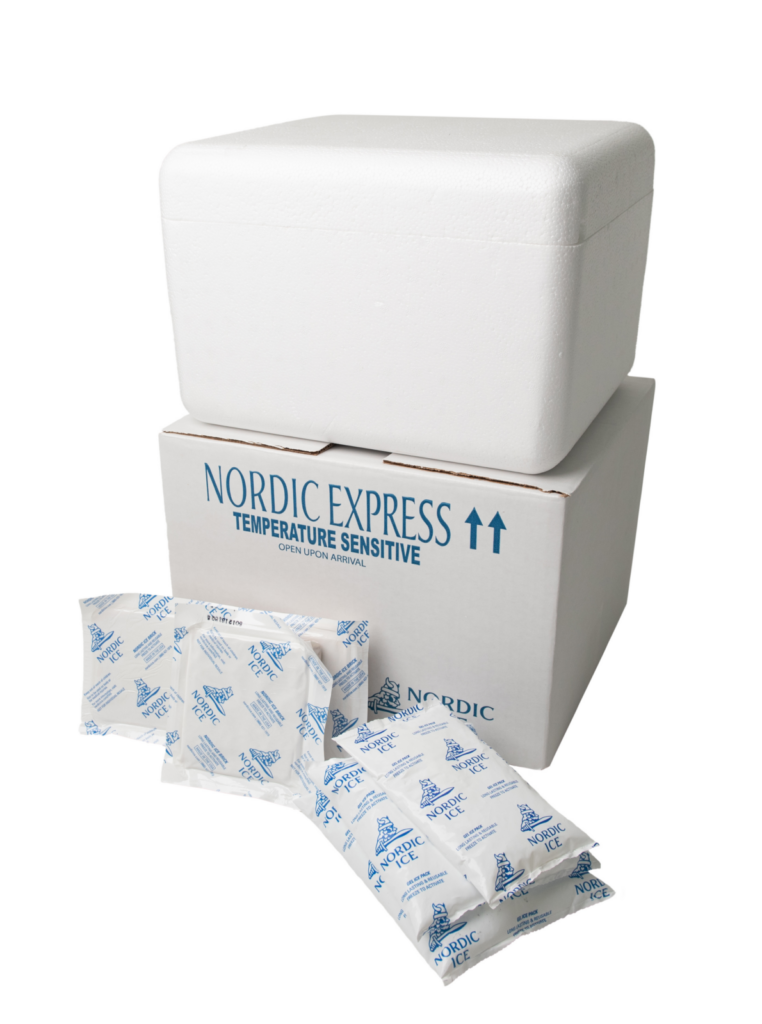
For early growth programs, simplicity is often the priority. Teams need compact refrigerated packaging, straightforward instructions, and enough performance to support expected lanes. For recurring shipments, the focus shifts toward reducing staff-to-staff variability. Standardized shipper formats, repeatable refrigerant conditioning, and clear component sets become more important. For high-volume distribution, packaging must support throughput, kitting efficiency, and ongoing optimization as shipping lanes and seasonal conditions change.
This is where Nordic’s role becomes especially valuable. Nordic helps organizations move from improvised cold chain decisions to structured packaging systems. A well-structured fulfillment process should reduce uncertainty, support consistent execution, and make the correct steps easier to repeat across every shipment.
A strong pack-out standard defines how each shipment should be assembled, which components should be used, how refrigerants should be conditioned, where product should be positioned, and when monitoring should be added for confirmation. Once that process is documented and trained, the cold chain becomes less dependent on individual judgment.
Packaging That Supports Compliance and Daily Execution
For compounding pharmacies, clinic-dispensed therapies, and specialty pharmacy workflows, cold chain packaging should support process discipline and documentation expectations. Packaging alone does not create compliance, but it can help teams maintain consistent handling and demonstrate that shipping decisions are tied to defined requirements.
This is particularly important when peptide shipping programs are still being built. New therapies, new fulfillment channels, and expanding patient demand can create uncertainty. A performance-driven packaging approach helps define how long a package is expected to hold range, what conditions it is designed to withstand, and how the pack-out should be performed.
As programs scale, this structure supports training, quality review, and operational confidence. Staff do not have to interpret the package each time. They follow a repeatable system designed around the product and lane.
A defined packaging program also gives operations teams a stronger foundation for continuous improvement. If a shipment experiences a delay, a seasonal issue, or a receiving challenge, the team can review a known process instead of trying to reconstruct an improvised pack-out. That makes future adjustments more practical and evidence-informed.
A Stronger Foundation for Peptide Distribution
Peptide shipping calls for a packaging approach that responds to the sensitivity of the therapy itself, accounting for how formulation, transit exposure, seasonal variability, and fulfillment practices can influence product condition from pack-out to arrival. As peptide therapies become more common across wellness, longevity, and specialty pharmacy channels, the risks tied to inconsistent pack-outs will only become more visible.
Nordic Cold Chain Solutions helps organizations build packaging approaches that support repeatable 2 to 8°C performance, practical fulfillment, and scalable cold chain execution. Whether a program is launching its first peptide shipments or standardizing a higher-volume operation, the right packaging foundation can reduce variability and protect product integrity across real-world delivery conditions.
For peptide cold chain programs, arrival condition cannot be judged by a surface-level sense of coolness. True performance depends on whether the packaging system can hold the required temperature range consistently across repeat shipments, higher order volumes, and changing transit conditions. Reach out to Nordic Cold Chain Solutions to standardize peptide shipping with packaging designed around real-world lanes, products, and delivery risks.